



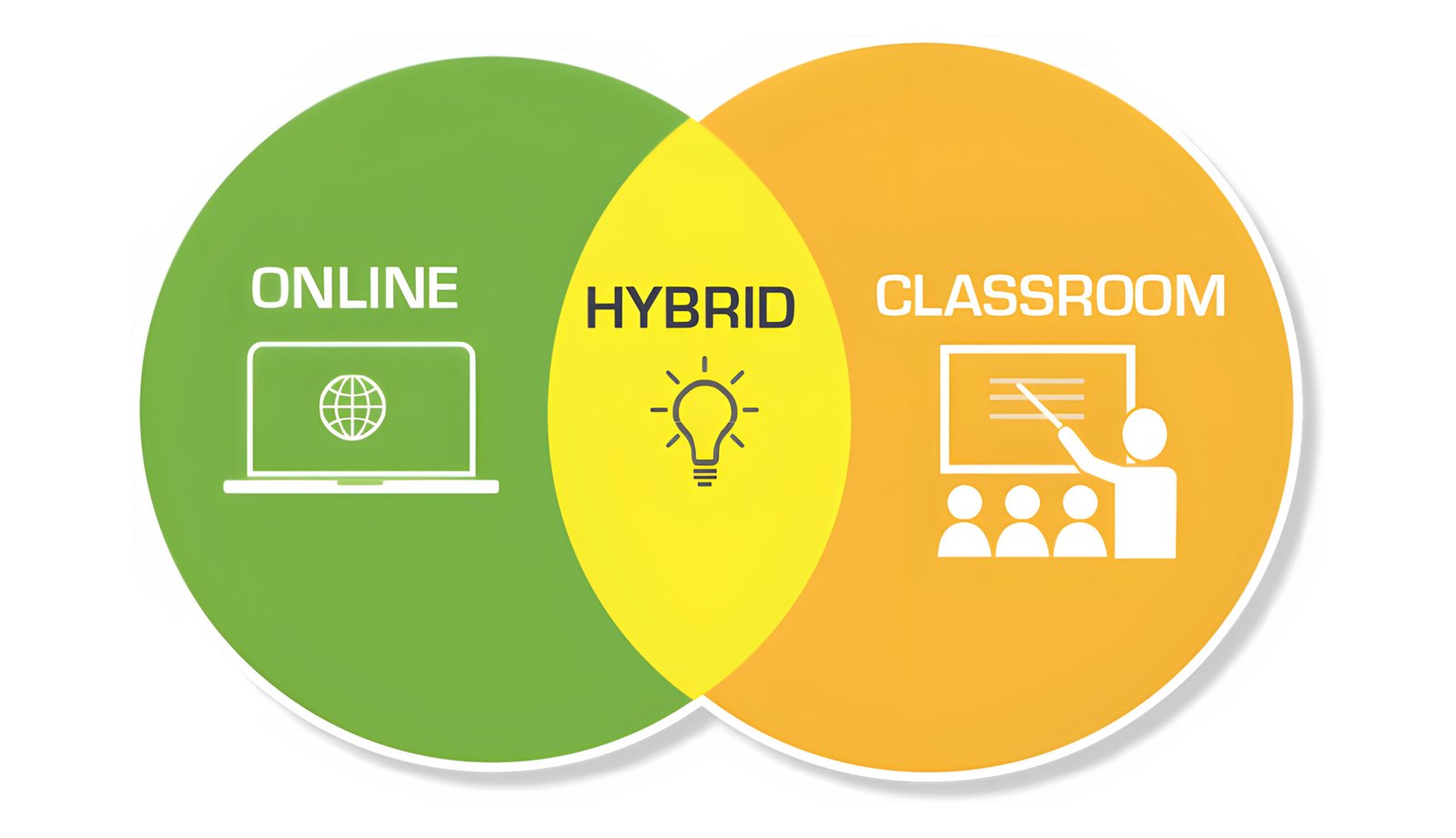
Hybrid learning is solidifying its position as a fundamental component of education rather than just a pandemic-era necessity, especially in higher ed. Education leaders should take note that by 2025, more than half of higher education institutions plan to grow their hybrid learning offerings, as reported in a recent McKinsey & Company analysis. The overwhelming student satisfaction with virtual learning—93% according to BestColleges.com—signals that administrators must prepare for online education to become a lasting focus in modern academics.
This shift has significant implications for institutional planning, from infrastructure investments to staffing models. Schools are discovering that hybrid approaches not only offer cost efficiencies but also create new opportunities for students and teachers alike. Education professionals should anticipate a continued evolution in the implementation of hybrid learning. Administrators should prepare for increased demand for flexible teaching arrangements as educators seek to balance in-person and remote work, and as institutions benefit from access to a broader pool of specialized instructors across different regions and time zones.
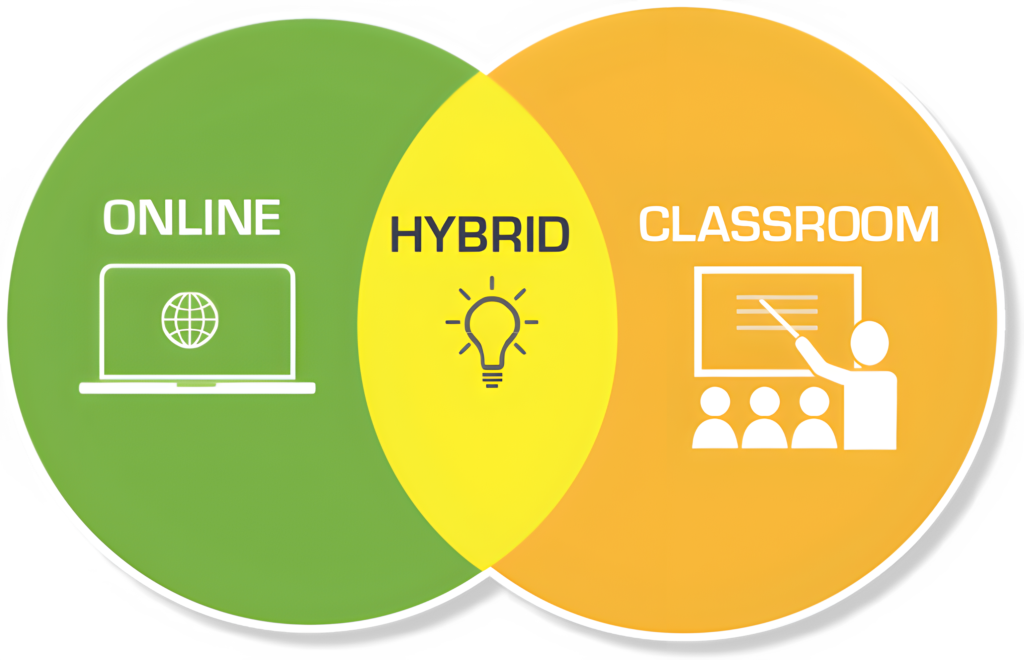
Why hybrid?
There are a number of good reasons why a hybrid format can be the best option for a student.
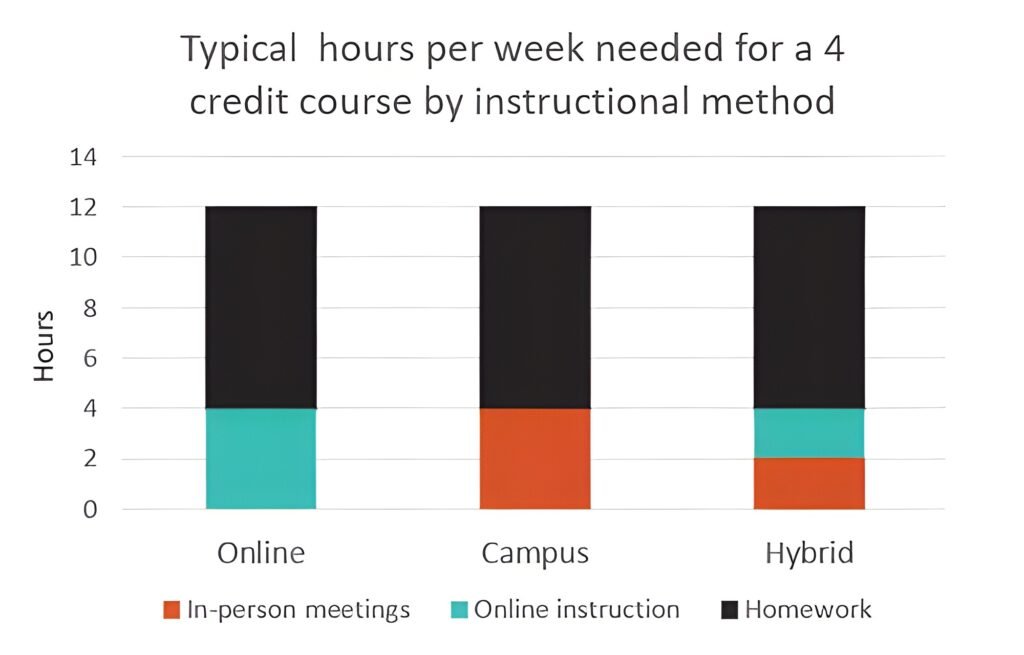
- A hybrid class typically only meets once a week which reduces the number of times that a student has to travel to campus. It also gives more time flexibility since half of the course time can be completed on the student’s own schedule. These aspects are especially beneficial to working students or students with families.
- Students today are very adept with digital technology e.g. Facebook, YouTube, FaceTime. Incorporating these types of digital technology into a hybrid course will encourage better engagement with today’s students.
- It provides the best of both formats: face-face meetings with the instructor for real-time engagement and online flexibility for adapting to students’ schedules.
Finally, a hybrid format allows for more efficient use of classroom space. This means that more classes and students can be served without having to add new facilities. This helps keep costs down which can slow the rise of tuition.
How to transition an existing course to a hybrid?
So how do you convert an existing face-face or existing online course into a hybrid format? It does take a little work but it is not all that complicated.
Start by examining all the current course activities (e.g. lecture, discussions, written assignments, tests,…) from the perspective “Does this activity work best in an online environment or face-face?”
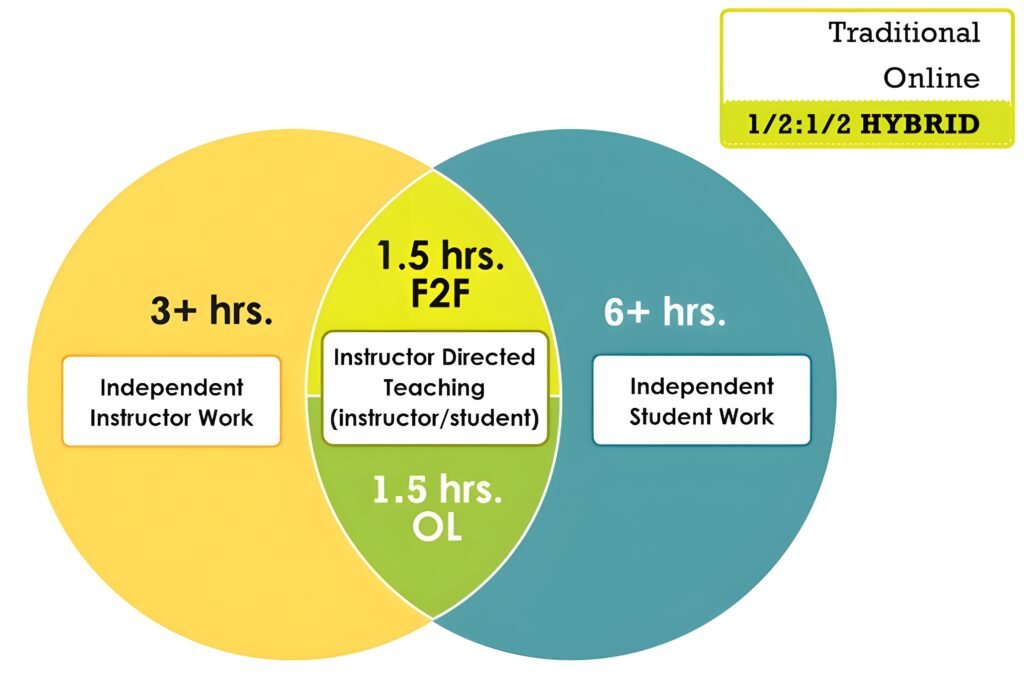
Next look at the amount of time a student would spend on the face-face or online activities. The ratio of time for a typical hybrid is 50/50. (Some course material may require a different ratio). If your initial assessment does not yield a 50/50 ratio, you should evaluate the activities and perhaps replace one or more. This is actually a healthy exercise because it causes you to reflect on why you included a particular activity in your course.
The key principle when creating a hybrid course is intentionality and planned integration of the course components. Activities that are online should be online because that is the best format for them. Likewise face-face activities should be limited to those that really require / benefit from a classroom setting. From my personal experience, I found that moving the lectures online (recorded videos) meant that I had more face-face time to explore the more difficult / challenging aspects of the course.
Current state of hybrids at PCC (Greg Kaminski)
With the help of various entities, the hybrid faculty work group took significant steps during the past couple of years to improve support of hybrid instruction at PCC. Their report after the initial year included a set of 35 recommendations, about half of which were addressed during the second year. One crucial sustainable achievement was in student awareness – communicating hybrids to students through a new set of course modality icons. You have certainly seen these icons in the schedule.
Another page addresses the question “Are hybrids right for me?” This is an attempt to clarify expectations to students regarding hybrid courses.
The hybrid work group also identified a strong need for hybrid course design training for faculty. Last year, in connection with a President’s Fund award, a team of hybrid faculty mentors designed a hybrid course template along with a half-day workshop on hybrid course design. The hybrid mentor program has ended, but many of the resources are still available. For example, anyone designing or updating a hybrid course has access to the special template designed for hybrids in Brightspace. It’s also possible to import just the introductory modules of the template, which include the hybrid syllabus template and course schedule templates designed for hybrids.
Please visit the Hybrid design resources page for key hybrid resources, including access to the hybrid template in Brightspace, planning tools and video clips from our workshop, advice from the hybrid faculty mentor team, tech support resources, and a number of excellent external resources. If you are interested in the official reports of hybrid work group and the administrative response, you’ll find them on our Hybrid courses page.
Beyond these resources, the current state of supporting hybrid courses is in a holding pattern. The administration is aware of the need, and I expect this topic to be addressed at some point, but I don’t know when. Perhaps it will be integrated into the reorg planning. I am happy to answer questions and provide guidance, even facilitate a workshop for a department or division, so feel free to contact me. We also have D2L Brightspace training provided by our ITS team.
