
If you are graduating in 2026, you have probably heard that AI is taking the jobs you were training for. I wanted to check what the data says before believing that entry-level jobs are disappearing for everyone. The picture is mixed, and what you do next matters.
What the numbers say
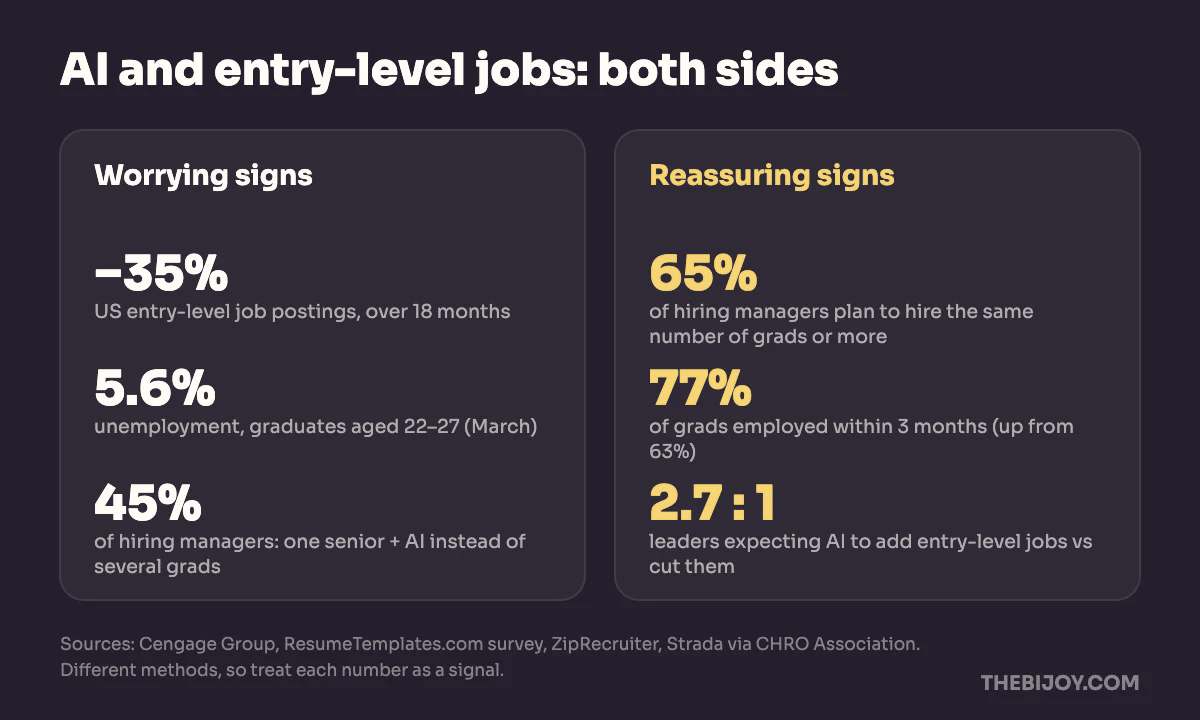
The worrying side is real. One analysis reports that US entry-level job postings fell by 35% in 18 months, largely because of AI, while unemployment among 22 to 27 year old graduates reached 5.6% in March.
Hiring managers say the same. In a May 2026 survey of 1,000 US hiring managers, 45% said their company has restructured so one senior worker plus AI does the work of several graduates, and 55% had moved at least part of their entry-level hiring budget to AI.
Graduates feel it. A Monster report found that 89% of the Class of 2026 think AI could replace entry-level roles, up from 64% a year earlier.
What the data does not say
There is a second side that headlines skip.
In the same hiring-manager survey, 65% planned to hire the same number of graduates or more than last year. ZipRecruiter found that the share of graduates who got a job within three months rose from 63% to 77% year over year, even though competition is tougher.
A survey of employers by Strada found that leaders expecting AI to add entry-level jobs outnumbered those expecting cuts by nearly 2.7 to 1. And analysts warn that a slower hiring market and other economic factors may also explain the drop, so AI is not proven to be the only cause.
These surveys use different methods, so treat each number as a signal, not a final answer.
What is actually changing
The bigger shift is not mass job loss. It is that the routine tasks that used to teach beginners, like basic research, data entry, and first drafts, are now done by AI. That raises what employers expect from a first-time hire. Researchers call the risk an experience gap: fewer chances to learn on the job.
4 things new graduates can do now
- Get real work experience, even part-time. ZipRecruiter found that graduates who worked during school found jobs at 82%, versus 41% for those who did not. Experience in teams, customers, and deadlines still counts.
- Learn to use AI tools well. Only 29% of rising graduates said their school gave them extensive AI training for work, according to the same ZipRecruiter report. Teach yourself, and be able to show what you built.
- Build proof, not just a degree. A small project, a blog, or a tool you made says more than a line on a CV.
- Choose skills AI does not replace easily. Judgement, communication, leading people, and solving problems with customers.
The bottom line
AI is not ending careers for graduates. It is raising the bar for the first rung, which means the people who build experience and AI skills early have an advantage.
What has your experience been? Send me a message through the contact page.
Subscribe for one email a week on technology, AI, and education. More posts are on the blog; you can also read about me.
Sources
- AI Is Changing Entry-Level Jobs. How Will Workers Build Experience? (Cengage Group, May 29, 2026)
- Class of 2026 College Graduate Hiring Report (ResumeTemplates.com survey, via PR Newswire)
- 89% of 2026 Grads Think AI Will Take Their Job (Monster report, via The Interview Guys)
- ZipRecruiter Finds Grad Job Market Improving (April 16, 2026)
- New Data Shows a More Hopeful Outlook for Entry-Level Hires (CHRO Association, Strada survey, May 2026)
- How Will AI Affect Jobs in the Future? (SoFi, August 4, 2026)
Keep reading
- How a Teen Turned a 3D-Printed Beer Can Holder Into an $808K Business
- Can You Start an AI Agency With Zero Skills? A Reality Check
- From $400K to $32M? What TikTok Shop’s Micro-Brands Teach Small Businesses
Want one clear email a week on technology, AI and education? Join the newsletter.